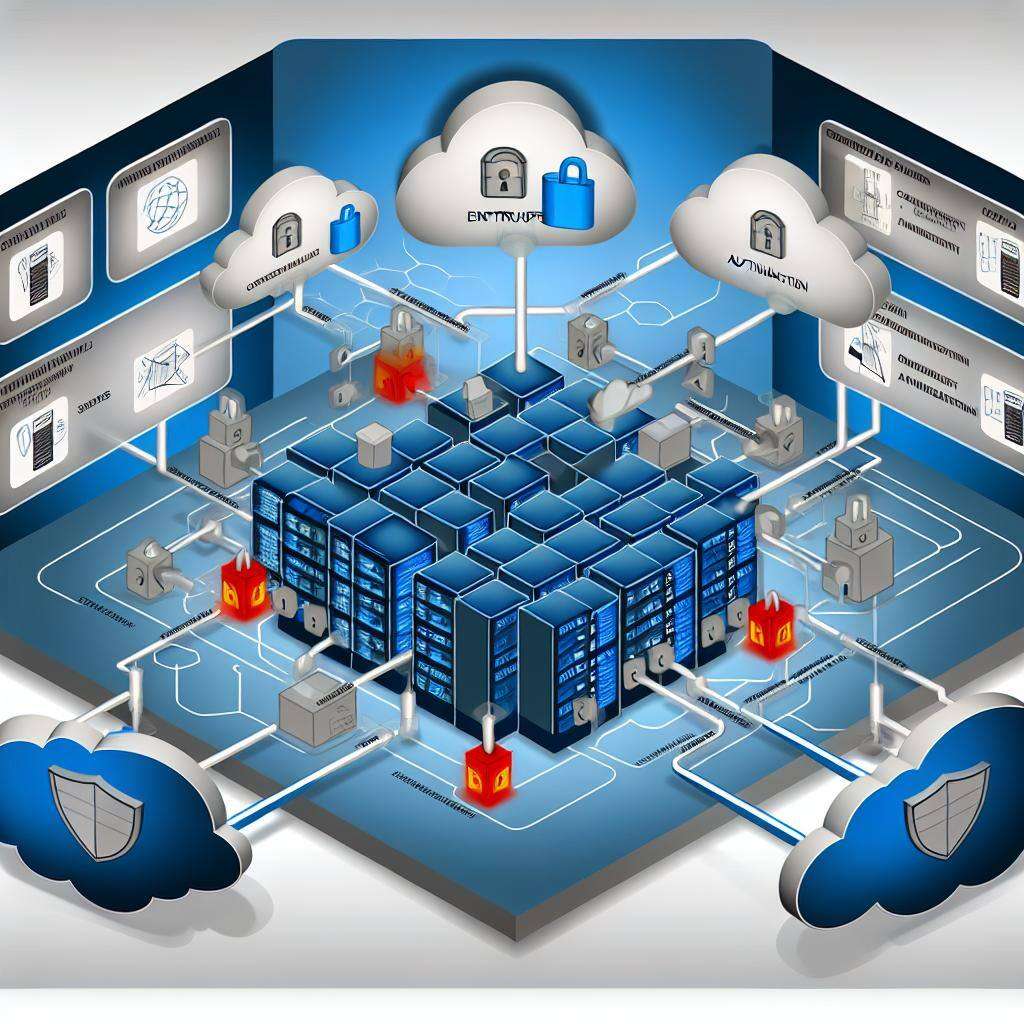

When you hear "cloud migration," the conversation usually centers on speed, cost savings, and agility. But what about the risks lurking beneath the surface for regulated organizations? If your business handles patient records, financial transactions, or government data, a careless migration can expose you to compliance violations, operational downtime, and security gaps that take months to close. Cyber Advisors helps mid-market organizations build hybrid cloud strategies that protect data, satisfy regulators, and position your IT for growth.
This guide walks you through every stage of a hybrid cloud migration strategy designed specifically for regulated mid-market organizations. You'll learn how to evaluate workloads, choose where each one should run, address compliance requirements like HIPAA, PCI, and CMMC, and avoid the pitfalls that stall projects and drain budgets.
Key Takeaways: Hybrid Cloud Migration in 2026
- Hybrid cloud lets you keep compliance-sensitive workloads on-premises while scaling elastic applications in the public cloud.
- A workload placement framework scoring latency, data residency, and compliance helps you decide where each application belongs.
- Cyber Advisors delivers risk management assessments that map regulatory requirements to your cloud architecture before migration begins.
- Unified identity, network segmentation, and policy-as-code reduce your attack surface across both on-premises and cloud environments.
- Phased migration with 90-day milestones cuts budget overruns and gives your team time to build cloud operations skills.
What Is Hybrid Cloud Migration?
Hybrid cloud migration is the process of moving some workloads to a public cloud platform (such as Azure, AWS, or Google Cloud) while keeping others on your own servers or in a private data center. The two environments connect through shared identity, networking, and security controls so they function as a single operating model.
For regulated organizations, this matters because not every application can live in a public cloud. Electronic health records, payment processing engines, and controlled unclassified information often need to stay local due to compliance requirements. A hybrid approach lets you modernize what you can and protect what you must.
The distinction between hybrid and multi-cloud is worth noting. Multi-cloud means using more than one public cloud provider. Hybrid cloud specifically refers to connecting on-premises infrastructure with one or more cloud environments under unified governance. Many regulated organizations end up with both: a hybrid architecture that also spans multiple cloud providers.
Why Regulated Mid-Market Organizations Choose Hybrid Cloud
Mid-market companies (roughly 100 to 5,000 employees) occupy a unique position. You carry the same compliance obligations as large enterprises, but you don't have dedicated cloud engineering teams or unlimited budgets. A hybrid model addresses this tension directly.
Workloads bound by HIPAA, PCI-DSS, CMMC, or SOX can remain on infrastructure you control, where audit trails and data residency are straightforward to document. Analytics, collaboration tools, and customer-facing applications can scale in the cloud, where you pay only for what you use. According to Flexera's 2025 State of the Cloud Report, 60% of organizations now partner with managed service providers for at least some cloud management, a trend that reflects the growing complexity of multi-environment operations.
What Are the Top Cloud Adoption Barriers for Mid-Sized Companies?
Before you build a migration plan, you need to understand what typically stalls projects at organizations your size. These are the barriers that cause the most disruption, based on patterns across healthcare, manufacturing, banking, and local government.
Compliance Uncertainty
Regulatory frameworks like HIPAA and PCI-DSS have specific requirements for how data is stored, transmitted, and accessed. Many mid-sized organizations discover too late that their existing security controls don't translate directly to cloud environments. The shared responsibility model means your cloud provider secures the infrastructure, but you remain accountable for data protection, access management, and audit documentation.
Skills Gaps in Cloud Operations
Your IT team knows your current systems well. Cloud platforms operate differently, and the skills gap can slow migration significantly. Mid-sized companies often can't justify a full-time cloud engineering team, yet their environments are too complex for a simple lift-and-shift. Managed IT services and staff augmentation fill this gap during the critical transition period.
Cost Unpredictability
Pay-as-you-go pricing sounds attractive until your first cloud bill arrives with unexpected egress fees, storage costs, and idle compute charges. Flexera's 2025 report found that organizations continue to report significant wasted cloud spend through inefficient resource allocation. For tighter mid-market budgets, FinOps discipline is essential from day one.
Legacy System Dependencies
ERP platforms, custom manufacturing execution systems, and decades-old databases rarely migrate cleanly. Monolithic architectures, undocumented dependencies, and outdated code make a full cloud move unrealistic without a phased modernization roadmap. Hybrid cloud accommodates this reality by letting legacy systems stay local while newer applications move to cloud infrastructure.
How to Build a Workload Placement Framework
A workload placement framework is a scoring model that tells you where each application should run. Instead of debating opinions in a conference room, you assign numerical scores to objective criteria and let the data guide the decision.
Step 1: Identify Your Evaluation Criteria
Score each workload against these six factors on a 1-to-5 scale, where 5 means the factor is critical for that application.
- Data residency and sovereignty: Does this workload handle regulated data that must stay in a specific jurisdiction or on-premises?
- Latency sensitivity: Does the application require sub-millisecond response times, such as OT systems on a manufacturing floor?
- Elasticity requirements: Does the workload experience seasonal spikes or bursty demand patterns?
- Modernization readiness: Is the application already containerized, or is it a monolith that needs refactoring?
- Integration coupling: How many on-premises systems does this application depend on?
- Compliance scope: Which regulatory frameworks (HIPAA, PCI, CMMC) directly govern this workload?
Step 2: Score and Sort Workloads
Create a spreadsheet with each application in a row and each factor in a column. Sum the "on-premises weight" and "cloud weight" columns. Workloads with higher on-premises scores stay local. Workloads with higher cloud scores become migration candidates. Close scores suggest a hybrid active-active or cloud-burst pattern.
Step 3: Validate with Stakeholders
Share results with your security, finance, and operations leaders. Document the business rationale for each placement decision. This documentation becomes your audit trail when regulators or internal auditors ask why a particular workload runs where it does.
What Does a Hybrid Cloud Reference Architecture Look Like?
Regardless of which cloud provider you choose, successful hybrid architectures share five structural pillars. Each pillar must work consistently across both your on-premises and cloud environments.
Identity as the Control Plane
Adopt a single identity provider (such as Microsoft Entra ID) as the authentication source of truth for both environments. Enforce phishing-resistant multi-factor authentication (MFA) for all administrators and service accounts. Standardize role-based access control (RBAC) so permissions work the same way everywhere.
Zero Trust Networking
Segment traffic by application tier and data sensitivity. Use private connectivity (such as Azure ExpressRoute or AWS Direct Connect) for steady, high-volume data flows. Apply micro-segmentation and policy-based routing so compromised credentials in one zone can't reach sensitive controllers in another. Cyber Advisors builds cloud security controls into each migration engagement, ensuring your network posture doesn't weaken during the transition.
Data Governance and Classification
Apply consistent data classification labels across both environments. Sensitive data (PHI, PII, financial records) stays on-premises by default and replicates to the cloud only in masked or tokenized form. Log every data movement event for audit purposes, and tie those logs to your data loss prevention (DLP) controls.
Unified Observability
Collect metrics, logs, and distributed traces in a single monitoring platform. Define service-level objectives (SLOs) for each application tier and alert on error-budget burn rather than raw utilization spikes. Weekly anomaly reviews catch misconfigured resources, tag drift, and noisy alerts before they become outages.
Security as Code
Enforce guardrails through policy-as-code tools (such as Azure Policy or AWS Service Control Policies) with automated remediation. Connect both environments to a centralized SIEM/SOAR platform so your security operations center has full visibility. Run regular tabletop exercises that simulate hybrid incident scenarios, including ransomware propagation from on-premises to cloud and misconfigured cloud storage buckets.
How to Address Compliance During Hybrid Cloud Migration
Compliance isn't a checkbox you complete after migration. It needs to be woven into every phase of your strategy, from workload assessment through ongoing operations.
Map Regulatory Requirements Before You Migrate
Identify which compliance frameworks govern each workload. Healthcare organizations need HIPAA. Financial services firms face GLBA and PCI-DSS. Government contractors handling controlled unclassified information must meet CMMC. Document exactly how each requirement will be satisfied in the target environment, including data encryption, access controls, audit logging, and breach notification procedures.
Build Compliance into Your Landing Zones
A landing zone is a pre-configured cloud environment with security, networking, and governance controls already in place. When a new workload lands in this zone, it inherits the correct policies automatically. This approach prevents the costly mistake of migrating first and retrofitting compliance later.
Conduct Pre-Migration Risk Assessments
Cyber Advisors performs risk management and compliance assessments that identify gaps in your current security posture before migration begins. This process maps your existing controls to cloud-specific requirements, flags areas where your shared responsibility obligations change, and produces a remediation roadmap you can prioritize by risk impact.
A 90-Day Hybrid Cloud Migration Roadmap
Breaking your migration into 30-day phases reduces risk, keeps stakeholders aligned, and gives your team achievable milestones.
Days 1 to 30: Assess and Align
Run your workload placement assessment using the scoring framework above. Define security baselines, tagging standards, and network connectivity patterns. Build a FinOps model that projects costs for reserved capacity versus burst usage. Engage your compliance team to document regulatory requirements for each migration candidate.
Days 31 to 60: Build the Platform
Stand up landing zones in both your on-premises and cloud environments. Deploy identity federation, private networking, and policy-as-code guardrails. Integrate your managed detection and response tooling so security monitoring covers the new environment from the start. Automate backup policies following the 3-2-1-1-0 pattern: three copies of data, two different media types, one copy offsite, one copy immutable, and zero errors in recovery tests.
Days 61 to 90: Migrate and Optimize
Move one steady workload and one elastic workload as learning pilots. Validate that compliance controls, cost projections, and performance targets hold under real conditions. Conduct a game-day exercise simulating an outage and a security incident across both environments. Publish your first cost dashboard and adjust reserved capacity and autoscale rules based on observed usage.
How to Secure Your Hybrid Cloud Environment Post-Migration
Migration day is not the finish line. Your hybrid environment needs ongoing security operations to stay protected against evolving threats.
Implement 24/7 Monitoring
Mid-sized organizations often lack round-the-clock security staff. Cyberattacks frequently target evenings and weekends, exactly when your team isn't watching. A managed SOC combines human analysts with automated detection to cover gaps your internal team can't fill.
Test Your Defenses Regularly
Penetration testing validates that your cloud configurations, access controls, and network segmentation hold up under adversarial conditions. Cyber Advisors offers cloud security assessments tailored for multi-cloud environments, including AWS, Google Cloud, and Microsoft Azure. These assessments go beyond automated scans to include manual testing by experienced security analysts who understand regulated industry requirements.
Maintain an Incident Response Plan
Your incident response plan needs to account for hybrid scenarios. A compromised credential in the cloud could grant access to on-premises resources, and vice versa. Document runbooks for each scenario, assign clear ownership, and practice your response at least quarterly.
What Are Common Hybrid Cloud Migration Pitfalls?
Even well-planned migrations can stumble. Knowing where others have tripped helps you avoid the same mistakes.
Running Two Separate Operating Models
Treating on-premises and cloud as independent kingdoms doubles your operational effort and introduces policy gaps. Unify identity, networking, observability, and security controls from the start. One set of guardrails should govern both environments.
Lift-and-Shift Without Dependency Mapping
Moving a virtual machine to the cloud without mapping its data flows, API dependencies, and latency requirements creates performance problems that are expensive to fix after the fact. Spend time on discovery before you move anything.
Ignoring FinOps Until Bills Arrive
Cloud cost management isn't something you bolt on after migration. Establish budget alerts, resource tagging, and showback dashboards during your platform build phase (days 31 to 60). Early visibility prevents the sticker shock that undermines executive confidence in your cloud strategy.
Assign FinOps ownership to a specific person or team from the start. Flexera's 2025 report found that 59% of organizations now have a dedicated FinOps team, up from 51% the previous year. Even a part-time FinOps lead can prevent the runaway spend that often derails mid-market cloud projects.
Skipping the Exit Strategy
Vendor lock-in is a real concern. Document how you would move or refactor workloads if contract terms change. Favor open runtimes (containers, Kubernetes), standard authentication protocols (OIDC, SAML), and S3-compatible storage to preserve portability.
Keep your architecture modular and your contracts flexible. Review workload placement quarterly, and update your exit documentation alongside any infrastructure changes. A 12-to-24-month exit plan protects your organization from being trapped in unfavorable terms.
How Cyber Advisors Supports Hybrid Cloud Migration for Regulated Organizations
Cyber Advisors brings security-first thinking to every cloud engagement. Our IT modernization services combine strategic architecture planning with hands-on migration support, and our hybrid cloud expertise spans manufacturing, healthcare, financial services, and government.
We start by understanding your compliance obligations and mapping them to a hybrid architecture. Our risk management and compliance auditors identify gaps before they become costly problems. After migration, our managed IT and cybersecurity services keep your environment monitored, patched, and protected around the clock.
Proactive security is a business necessity, not an optional IT upgrade. When your organization is ready to move beyond planning into action, we're here to build a migration strategy that protects your data, satisfies your regulators, and scales with your growth. Stay safe and stay informed.
FAQs About Hybrid Cloud Migration for Regulated Organizations
What is hybrid cloud migration, and how does it differ from full cloud migration?
Hybrid cloud migration moves some workloads to a public cloud while keeping others on-premises. Full cloud migration moves everything off local infrastructure.
The hybrid approach is particularly useful for regulated organizations that need to keep sensitive data local while modernizing other applications in the cloud.
Which compliance frameworks affect hybrid cloud migration?
HIPAA, PCI-DSS, CMMC, SOX, GLBA, and GDPR all have specific requirements for data storage, encryption, and access control that influence where workloads should run.
Cyber Advisors maps each applicable framework to your target architecture during pre-migration risk assessments, so compliance gaps are addressed before you move any data.
How long does a hybrid cloud migration take for a mid-sized company?
A typical migration for a mid-sized organization takes 6 to 18 months, depending on environment complexity and compliance requirements.
A phased 90-day approach, starting with assessment and building toward pilot workloads, helps you gain confidence before committing to broader migration.
How does Cyber Advisors help secure hybrid cloud environments?
Cyber Advisors delivers cloud security assessments, managed detection and response, and 24/7 SOC monitoring tailored for hybrid environments.
Our team also performs penetration testing against your cloud configurations to validate that access controls, segmentation, and encryption hold up under adversarial conditions.
What is the biggest risk during hybrid cloud migration?
Security and compliance gaps are the most dangerous risk. Moving workloads without properly configuring cloud security controls can expose regulated data and trigger audit failures.
Cyber Advisors addresses this by performing risk management assessments before migration and building compliance controls into your cloud landing zones from day one.
Can legacy applications run in a hybrid cloud environment?
Yes. Hybrid cloud is designed to accommodate legacy applications alongside cloud-native workloads. Applications that can't be refactored immediately remain on-premises and connect to cloud services through secure APIs and private networking.
Over time, you can modernize these applications in phases without disrupting daily operations.