
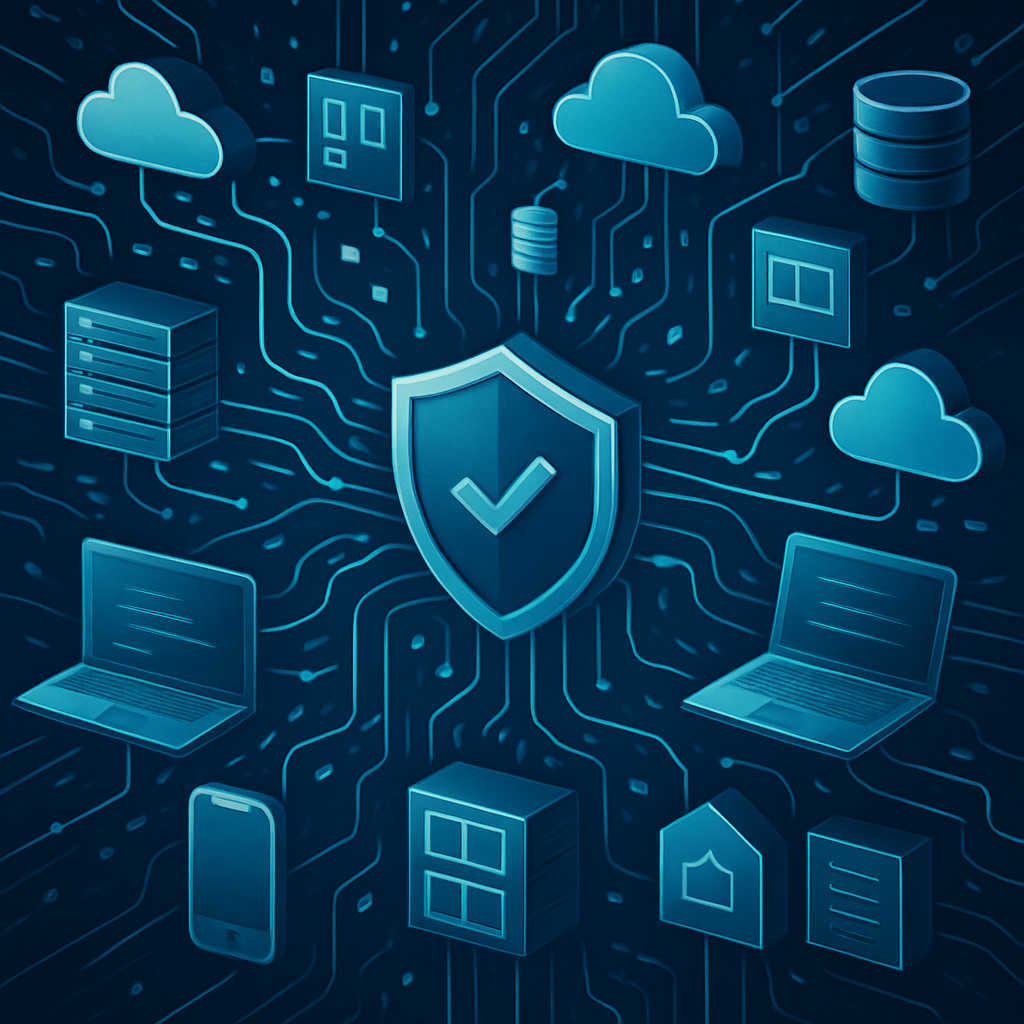
Today’s organizations rely heavily on digital tools, cloud platforms, and connected devices to operate efficiently. Whether in manufacturing, finance, healthcare, energy, retail, or professional services, nearly every modern organization has become a tech-enabled company—one that depends on technology to drive productivity, collaboration, and customer value.
The Growing Challenge of Data Sprawl in Tech-Enabled Companies
But with this digital transformation comes an unintended consequence: data sprawl.
Data sprawl occurs when information is scattered across multiple systems, cloud applications, endpoints, and environments. As organizations adopt more SaaS tools, expand remote workforces, modernize operations, and increase mobility, data becomes fragmented and harder to manage. This sprawl creates visibility gaps, security risks, compliance challenges, and greater operational complexity.
For tech-enabled companies, data sprawl is no longer an inconvenience—it’s a significant business risk that impacts efficiency, costs, and security posture.
Why Data Sprawl Is Growing Faster Than IT Can Keep Up
Several converging factors fuel the rapid growth of data across modern environments:
-
Proliferation of cloud applications
Every department—from HR to sales to engineering—now relies on specialized SaaS tools, each generating and storing its own data. -
Remote and hybrid work models
Employees create and access data from a wide array of devices and networks, distributing information far beyond traditional corporate boundaries. -
Increased use of mobile and IoT devices
Smartphones, tablets, and smart operational equipment continuously generate data in real time. -
Shadow IT adoption
Teams often adopt new tools without IT approval, creating unmanaged data repositories.
This fragmentation creates data silos, isolating critical information and limiting collaboration and decision-making. Traditional backup and data protection systems were never built to support this level of scale, complexity, and fluidity.
Why Legacy Data Protection Tools Fall Short
Legacy systems struggle to protect today’s data-rich, cloud-enabled environments. They often lack:
- Scalability: Traditional backup architectures can’t keep pace with rapidly expanding data volumes or new SaaS workloads.
- Flexibility: Rigid, appliance-based systems were designed for centralized environments—not for distributed users, devices, and apps.
- Performance: Slow backup and recovery processes undermine business continuity during outages or cyber incidents.
- Visibility: Siloed data makes it difficult for IT teams to know what data exists, where it resides, and whether it’s properly protected.
- Security: Outdated tools cannot consistently enforce modern security standards, zero-trust principles, or ransomware-resilient architectures.
As a result, tech-enabled companies face rising risks of data loss, operational downtime, and regulatory noncompliance.
Using Cloud Application Data Strategically—Not Chaotically
Cloud applications deliver tremendous value: scalability, accessibility, and efficiency. But unmanaged cloud sprawl increases exposure and weakens data protection.
Most cloud platforms operate under a shared-responsibility model. While the provider secures the infrastructure, the organization is responsible for:
-
Data protection
-
Access controls
-
Backup and recovery
-
Compliance and retention
Without centralized oversight, data becomes fragmented across dozens—or hundreds—of apps.
Druva’s cloud-native platform helps tech-enabled organizations regain control by:
-
Integrating directly with leading SaaS applications
-
Centralizing backup, governance, and security policies
-
Ensuring consistent protection across every cloud workload
-
Delivering unified visibility across distributed data environments
This reduces risk, eliminates blind spots, and simplifies compliance reporting.
Mitigating Ransomware Risks with Modern Protection
Ransomware is now one of the most widespread threats affecting tech-enabled companies of all sizes and industries. Cybercriminals have increasingly targeted SaaS data, cloud workloads, and endpoints, knowing that many traditional backup solutions cannot adequately protect them.
A successful ransomware attack can:
-
Encrypt critical data
-
Halt operations
-
Corrupt backups
-
Trigger regulatory violations
-
Damage brand trust
-
Result in expensive recovery costs
To stay resilient, companies need protection mechanisms that go far beyond traditional defenses.
Druva strengthens cyber resilience with:
- Immutable, logically air-gapped backups: Once stored, backup data cannot be altered, encrypted, or deleted—protecting it even if attackers compromise production systems.
- Advanced ransomware detection: Machine-learning-driven anomaly detection identifies unusual activity early.
- Zero-trust access controls: Only authorized users gain access to the data they need—minimizing lateral movement.
- Rapid recovery of clean data: Point-in-time restore options enable fast resumption of operations with uninfected data.
Together, these capabilities drastically reduce downtime and financial impact during an attack.
Simplifying Compliance in Highly Regulated Environments
Tech-enabled companies often operate under strict data governance and regulatory frameworks, including:
-
GDPR
-
HIPAA
-
CCPA
-
SOX
-
SEC requirements
-
FedRAMP (for U.S. public-sector and government-related workloads)
Fragmented data environments make compliance complex and time-consuming. Druva simplifies compliance with:
-
Automated retention and policy enforcement
-
Centralized governance controls
-
Continuous monitoring
-
Immutable audit trails
-
Support for FedRAMP Moderate Authorized environments via Druva GovCloud
These features enable organizations to demonstrate regulatory adherence while reducing the risk of costly violations.
Why Druva’s Cloud-Native Architecture Makes a Difference
Unlike legacy solutions dependent on on-premises infrastructure, Druva’s fully cloud-native platform eliminates hardware, maintenance, and scalability limitations.
Tech-enabled companies benefit from:
- Effortless Scalability: Handle rapid data growth without architecture overhauls.
- Simplified Operations: Eliminate hardware patching, updating, troubleshooting, and refreshing.
- Centralized Data Protection: Protect endpoints, SaaS apps, cloud workloads, and hybrid environments—all from a single console.
- Lower Total Cost of Ownership: No appliances, no storage arrays, no hidden maintenance costs.
- Predictable Costs: Consumption-based pricing ensures organizations pay only for what they use.
This modern architecture aligns perfectly with the evolving needs of digital organizations.
REAL-WORLD SUCCESS EXAMPLES ACROSS TECH-ENABLED INDUSTRIES
MANUFACTURING ORGANIZATION IMPROVES EFFICIENCY
A major manufacturer struggled with costly, complex legacy systems combining Veeam and AWS storage. By consolidating onto Druva’s unified SaaS platform, they:
-
Eliminated infrastructure maintenance
-
Reduced backup spending
-
Improved security with immutable storage
-
Simplified compliance reporting
The result: a more resilient and efficient data protection strategy.
An Energy Sector Company Protects Thousands of Microsoft 365 Users
An energy firm required robust protection for thousands of Microsoft 365 mailboxes. Traditional tools were inflexible and difficult to scale. Druva delivered:
-
Point-in-time email recovery
-
Granular restore options
-
Ransomware-resilient architecture
-
Centralized management and compliance reporting
This strengthened resilience and simplified IT operations across their distributed workforce.
These examples demonstrate Druva’s impact across diverse tech-enabled environments—not just traditional tech companies.
Cost-Effective Data Management Through Modernization
Controlling costs is a top priority for tech-enabled organizations. Legacy systems frequently incur:
-
Hardware refreshes
-
Storage expansion
-
Software licenses
-
Maintenance contracts
-
Dedicated staff to manage infrastructure
Druva eliminates these expenses through:
-
A 100% cloud-native model
-
Consumption-based pricing
-
Zero hardware requirements
-
Automated updates and maintenance
Organizations gain modern, scalable data protection while significantly reducing the total cost of ownership.
Future-Proofing Data Protection for a Digital-First World
As organizations continue adopting new tools, expanding cloud usage, and evolving operations, data protection strategies must remain flexible and forward-thinking.
Druva helps companies future-proof their data protection by delivering:
- Scalable Architecture: Supports rapid data growth without expensive upgrades.
- Stronger Security: Immutable backups, zero-trust controls, and continuous monitoring defend against emerging threats.
- Compliance Readiness: Automated policies and audit trails simplify regulatory adherence.
- Cost-Efficient Operations: Only pay for what you use—no hardware, no maintenance.
With Druva, tech-enabled companies gain a resilient foundation that evolves with their business, not against it.
Conclusion
As every industry becomes increasingly tech-enabled, data sprawl, cloud complexity, and cybersecurity threats pose escalating risks. Druva offers a modern, scalable, and secure approach to data protection—empowering organizations to safeguard their most valuable assets, maintain compliance, reduce costs, and recover swiftly from disruptions.
By modernizing data protection with Druva, organizations can focus on innovation and growth, confident that their data remains secure, accessible, and resilient.