
Businesses in Salt Lake City face growing technology demands that require expert oversight and constant attention. Managed IT services provide companies with professional technology management, proactive monitoring, and strategic support without the overhead costs of maintaining a full in-house IT department. This approach allows organizations to focus on their core operations while experienced professionals handle their infrastructure, security, and digital systems.

Salt Lake City's business landscape has evolved to depend heavily on reliable technology infrastructure and cybersecurity protection. Managed service providers (MSPs) in the region deliver comprehensive solutions that address everything from daily technical support to long-term digital transformation strategies. These partnerships give companies access to enterprise-level expertise and tools at a fraction of the cost of building internal capabilities.
The decision to work with a managed IT provider impacts how effectively a business operates and grows in an increasingly digital marketplace. Understanding what these services include and how to select the right MSP helps organizations make informed choices about their technology investments.
Key Takeaways
- Managed IT services deliver professional technology management and support without the cost of a full internal IT team
- Salt Lake City MSPs offer comprehensive solutions including cybersecurity, cloud services, and disaster recovery planning
- Selecting the right managed IT partner requires evaluating their service offerings, expertise, and alignment with business goals
Key Benefits of Managed IT for Salt Lake City Businesses
Managed IT support delivers measurable advantages that directly impact business operations, from minimizing system failures to adapting infrastructure as companies expand. These services provide structured approaches to technology management that address both immediate technical needs and long-term strategic goals.
Reducing Risk & Downtime
Proactive IT management identifies and resolves technical issues before they escalate into costly system failures. Managed service providers monitor networks, servers, and applications around the clock, detecting anomalies and security threats in real-time.
This approach helps Salt Lake City businesses reduce downtime significantly compared to reactive models where problems are addressed only after they occur. Studies show that unplanned outages cost small to medium businesses between $8,000 and $74,000 per hour depending on their size and industry.
Key risk reduction strategies include:
- Automated backup systems with verified recovery procedures
- Security patch management across all endpoints
- Threat detection and response protocols
- Regular vulnerability assessments
Managed IT providers maintain documented disaster recovery plans tailored to each business's specific needs. They test these plans periodically to ensure systems can be restored quickly when incidents occur.
Scaling IT to Business Growth
Scalable IT infrastructure adapts to changing business requirements without requiring complete system overhauls. Managed service providers assess current capacity and plan upgrades that align with projected growth patterns.
Companies expanding their operations need technology that supports additional users, locations, and data volume. Managed IT teams implement cloud solutions, virtual environments, and modular systems that grow incrementally rather than in large, expensive jumps.
This flexibility proves particularly valuable for Salt Lake City businesses experiencing seasonal fluctuations or rapid expansion. They can add licenses, storage capacity, and computing power as needed without maintaining excess infrastructure during slower periods.
Enhancing Productivity Through Proactive Support
On-site and remote support models ensure employees receive technical assistance when issues arise, regardless of their location. Help desk services resolve common problems within minutes rather than hours, keeping staff focused on their primary responsibilities.
Proactive monitoring prevents many technical disruptions before users experience them. Managed IT teams track system performance metrics, identifying bottlenecks and addressing capacity issues during off-hours.
Productivity improvements include:
- Average ticket resolution times under 30 minutes
- Reduced repeat issues through root cause analysis
- Standardized software configurations across all devices
- 24/7 access to technical resources
Regular maintenance schedules optimize system performance and extend hardware lifecycles. This structured approach reduces the frequency of emergency repairs and creates predictable IT operating costs.
Leading Managed Service Providers in Salt Lake City
Salt Lake City hosts several established managed service providers that deliver comprehensive IT solutions to businesses across various industries. These MSPs offer services ranging from network management and cybersecurity to cloud solutions and help desk support.
Executech
Executech operates as one of Utah's largest technology partners, maintaining a substantial presence in Salt Lake City since 1984. The company provides managed IT services to over 3,000 businesses across multiple states. Their service portfolio includes network infrastructure management, cybersecurity solutions, cloud services, and 24/7 help desk support.
The MSP employs a team of certified technicians who handle both proactive maintenance and reactive support. Executech serves clients across healthcare, finance, manufacturing, and professional services sectors. They maintain multiple certifications from major technology vendors and offer scalable solutions for businesses ranging from small offices to enterprise-level organizations.
Nexus IT
Nexus IT specializes in delivering managed IT services to small and mid-sized businesses throughout Salt Lake City. The provider focuses on proactive monitoring, security management, and strategic IT planning. Their approach emphasizes preventing issues before they impact business operations.
The company offers flat-rate pricing models and includes services such as network monitoring, data backup, disaster recovery, and compliance support. Nexus IT assigns dedicated account managers to client organizations. They provide both on-site and remote support options with guaranteed response times.
NetWize
NetWize delivers managed service provider solutions with an emphasis on cybersecurity and compliance. The company serves businesses that require robust security frameworks and regulatory adherence. Their team holds specialized certifications in security protocols and compliance standards.
NetWize provides vulnerability assessments, penetration testing, and security awareness training alongside traditional managed IT services. They implement multi-layered security approaches that include endpoint protection, firewall management, and email security. The provider also offers business continuity planning and disaster recovery services tailored to client-specific requirements.
INTELITECHS
INTELITECHS functions as a trusted technology partner for organizations seeking comprehensive IT management in Salt Lake City. The MSP delivers customized solutions based on business needs and growth objectives. Their service model includes strategic IT consulting, infrastructure management, and cloud migration services.
The company provides 24/7 monitoring and support through their operations center. INTELITECHS specializes in Microsoft technologies and maintains gold partner status with several enterprise software vendors. They serve clients in education, legal, non-profit, and corporate sectors with teams dedicated to specific technology stacks.
Protek Support
Protek Support offers managed IT services with a focus on reliability and transparent communication. The provider serves businesses throughout Salt Lake City with fixed-price service agreements. Their offerings include network administration, cloud services, security management, and hardware procurement.
The company maintains quick response times for both emergency and routine support requests. Protek Support conducts regular technology assessments to identify improvement opportunities and potential risks. They provide detailed reporting on system health, security incidents, and service metrics to keep clients informed about their IT infrastructure status.
Comprehensive IT Support Services

Managed IT providers in Salt Lake City deliver multi-layered support that addresses technical issues across all business operations. These services combine human expertise with automated systems to maintain business continuity and resolve problems quickly.
Help Desk & End-User Support
Help desk services function as the first point of contact for employees experiencing technical difficulties. IT support teams handle password resets, software troubleshooting, email configuration issues, and application errors through phone, email, or ticketing systems.
Most managed IT providers offer tiered support levels. Level 1 technicians address common problems and basic requests. Level 2 specialists handle more complex issues requiring deeper technical knowledge. Level 3 engineers manage critical system failures and advanced troubleshooting.
Response times vary by service agreement, with priority issues receiving attention within 15-30 minutes. Standard requests typically receive responses within 2-4 hours. Many providers maintain 24/7 availability for emergency situations.
On-Site & Remote IT Assistance
Remote support enables technicians to access systems directly through secure connections. This approach resolves approximately 80% of technical issues without physical presence. Technicians can install updates, configure settings, diagnose hardware problems, and fix software conflicts from their locations.
On-site assistance becomes necessary for hardware installations, physical network repairs, or complex infrastructure projects. Technicians visit business locations to replace failed equipment, set up new workstations, configure servers, or address issues requiring hands-on intervention.
The combination of both methods reduces downtime and costs. Businesses receive faster resolution for software-related problems while maintaining access to physical support when needed.
Network & Infrastructure Management
Network monitoring tools track system performance, bandwidth usage, and security threats continuously. These systems alert IT teams to potential problems before they impact operations. Managed IT support includes regular maintenance of routers, switches, firewalls, and servers.
Infrastructure management encompasses patch management, firmware updates, and endpoint protection across all connected devices. Technicians maintain backup systems, verify data recovery procedures, and optimize network configurations for performance.
Security measures include firewall management, intrusion detection, and vulnerability assessments. Providers implement endpoint protection on workstations and mobile devices to prevent malware infections and unauthorized access.
Cybersecurity Solutions & Risk Mitigation
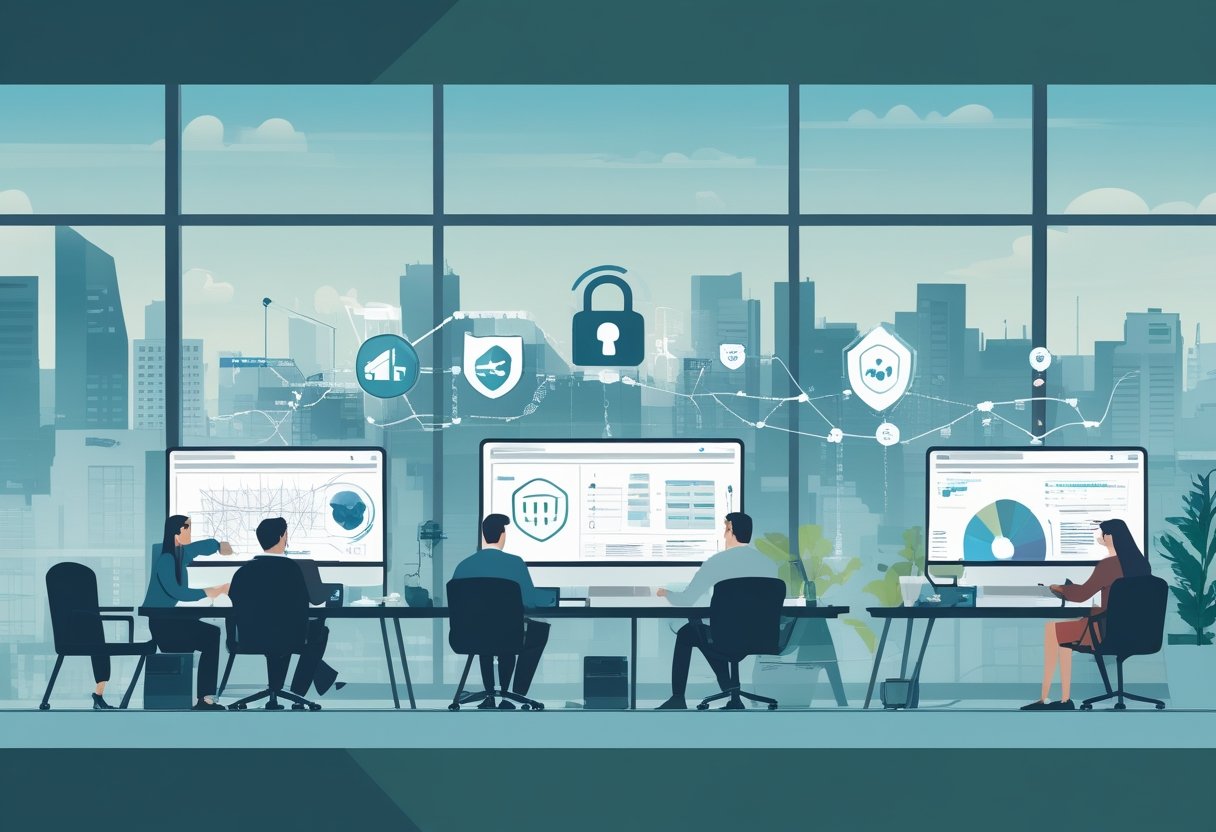
Salt Lake City businesses face mounting cyber threats that require comprehensive protection strategies combining advanced detection systems, trained personnel, and robust authentication protocols. Managed IT providers deploy layered security frameworks that address both technical vulnerabilities and human factors in organizational defense.
Advanced Threat Detection & Response
Endpoint protection platforms monitor workstations, servers, and mobile devices for suspicious activity in real-time. These systems use behavioral analysis to identify malware, ransomware, and unauthorized access attempts before they compromise networks.
Managed cybersecurity services include 24/7 threat monitoring with automated response capabilities. Security operations centers analyze network traffic patterns and investigate anomalies that bypass traditional antivirus software. When threats are detected, IT teams isolate affected systems and initiate remediation procedures to contain damage.
Key detection methods include:
- Network traffic analysis
- File integrity monitoring
- Intrusion detection systems
- Vulnerability scanning
Disaster recovery plans integrate with threat response protocols to ensure business continuity during security incidents. Regular penetration testing identifies weaknesses in infrastructure before attackers exploit them.
Employee Security Awareness Training
Human error accounts for a significant portion of security breaches in business environments. Security awareness training educates staff on phishing tactics, social engineering schemes, and safe data handling practices.
Programs typically cover password hygiene, recognizing suspicious emails, and proper responses to potential security incidents. Training sessions occur quarterly or bi-annually with simulated phishing exercises to test employee vigilance. Organizations that implement regular training reduce successful phishing attacks and improve overall security posture.
Employees learn to verify sender authenticity, avoid clicking unknown links, and report suspicious communications to IT departments immediately.
Multi-Factor Authentication & Email Security
Multi-factor authentication requires users to verify identity through multiple credentials beyond passwords. This approach typically combines something the user knows (password), something they have (mobile device or security token), and sometimes something they are (biometric data).
Email security solutions filter malicious attachments, block phishing attempts, and encrypt sensitive communications. Advanced systems quarantine suspicious messages and scan links for malware before delivery to user inboxes.
Cybersecurity services configure authentication policies that balance security requirements with user convenience. Organizations implement MFA for accessing cloud applications, VPNs, and administrative systems where data sensitivity warrants additional protection layers.
Cloud-Based Services & Digital Transformation

Managed IT providers in Salt Lake City deliver comprehensive cloud infrastructure services, from initial migrations to ongoing platform management and data protection strategies. These services enable businesses to modernize their operations while maintaining security and compliance standards.
Cloud Migrations & Hybrid Solutions
Cloud migrations require careful planning to minimize downtime and preserve data integrity during the transition. Managed IT providers assess existing infrastructure, identify dependencies, and create migration roadmaps tailored to business requirements.
Many Salt Lake City organizations adopt hybrid solutions that combine on-premises systems with cloud resources. This approach allows companies to maintain control over sensitive data while leveraging cloud scalability for other workloads. Providers configure secure connections between environments and optimize resource allocation across both platforms.
Common migration strategies include:
- Rehosting: Moving applications to the cloud without modifications
- Replatforming: Making minimal changes to optimize for cloud environments
- Refactoring: Redesigning applications to use cloud-native features
Managed IT teams handle technical complexities such as network configuration, security protocols, and application compatibility testing. They monitor performance metrics post-migration to ensure systems operate efficiently.
Microsoft 365 & Azure Management
Microsoft 365 administration encompasses email management, collaboration tools, and security configurations. Providers handle user provisioning, license management, and policy enforcement across organizations. They configure Teams, SharePoint, and Exchange Online to meet specific workflow requirements.
Azure management involves deploying and maintaining cloud infrastructure including virtual machines, databases, and storage solutions. Managed IT teams optimize resource usage to control costs while ensuring adequate performance. They implement identity management through Azure Active Directory and configure role-based access controls.
Key management tasks include:
- Performance monitoring and optimization
- Security updates and patch management
- Backup configuration and testing
- Cost analysis and resource scaling
Cloud Backup & Data Recovery
Cloud backup solutions provide automated, offsite data protection for business-critical information. Managed IT providers configure backup schedules, retention policies, and encryption standards to meet compliance requirements. They test recovery procedures regularly to verify data accessibility during emergencies.
Data recovery services ensure businesses can restore operations quickly after incidents. Providers establish recovery time objectives (RTO) and recovery point objectives (RPO) based on business needs. They maintain multiple backup copies across geographic locations to protect against regional outages.
Backup monitoring identifies failed operations and storage issues before they compromise data protection. Providers document recovery procedures and train staff on restoration processes for various scenarios.
Business Continuity & Disaster Recovery Planning
Salt Lake City businesses require robust data protection systems and recovery protocols to maintain operations during unexpected disruptions. Cloud-based solutions and strategic planning help organizations reduce downtime and protect critical business assets.
Data Backup Strategies
Managed IT providers in Salt Lake City implement multi-layered data backup and recovery systems to protect business information. The 3-2-1 backup rule serves as a foundation: three copies of data, two different storage types, and one off-site location.
Cloud backup solutions offer automatic synchronization and encrypted storage for critical files. These systems run continuous backups throughout the day, capturing changes in real-time or at scheduled intervals. Local backup systems complement cloud storage by providing faster recovery options for immediate file restoration needs.
Common backup types include:
- Full backups: Complete copies of all data
- Incremental backups: Only changed files since last backup
- Differential backups: Changes since last full backup
Organizations should test backup integrity monthly to verify data can be restored successfully. Retention policies typically maintain daily backups for two weeks, weekly backups for three months, and monthly backups for one year.
Minimizing Downtime During Disasters
Disaster recovery plans establish specific recovery time objectives (RTO) and recovery point objectives (RPO) for each business system. RTO defines the maximum acceptable downtime, while RPO determines how much data loss the business can tolerate.
Managed IT services provide failover systems that automatically switch to backup infrastructure when primary systems fail. Virtualized environments enable rapid deployment of replacement servers, often restoring operations within hours rather than days.
Salt Lake City businesses face risks from natural disasters, cyberattacks, hardware failures, and human error. A documented disaster recovery plan assigns specific responsibilities to team members and establishes communication protocols. Regular drills ensure staff can execute recovery procedures efficiently during actual emergencies.
Maintaining Operational Resilience
Business continuity extends beyond data recovery to encompass all aspects of maintaining operations during disruptions. Redundant internet connections, backup power systems, and alternative work locations ensure employees can continue working during outages.
Managed IT providers monitor systems continuously to identify potential failures before they impact operations. This proactive approach includes hardware health checks, security vulnerability assessments, and capacity planning.
Documentation of critical systems, vendor contacts, and recovery procedures must remain accessible during emergencies. Many organizations store this information both digitally and in physical formats at multiple locations. Annual reviews of business continuity plans account for infrastructure changes, new applications, and evolving business requirements.
Modern Communication & Collaboration Tools
Managed IT providers in Salt Lake City implement VoIP phone systems and unified communications platforms that integrate voice, video, messaging, and file sharing into centralized workflows. These solutions reduce communication costs while improving team productivity across distributed workforces.
VoIP Systems Integration
VoIP technology replaces traditional phone lines with internet-based calling systems that offer significant cost savings and enhanced functionality. Managed IT providers configure and maintain these systems to ensure reliable call quality and uptime for businesses.
Modern VoIP solutions integrate directly with customer relationship management software and help desk platforms. This integration allows employees to access call history, customer information, and communication records from a single interface. Providers handle the technical configuration of IP phones, softphones, and mobile applications.
Key VoIP features include:
- Call forwarding and routing
- Voicemail-to-email transcription
- Auto-attendant capabilities
- Conference calling with multiple participants
- Analytics and call reporting
Businesses benefit from scalability, as adding new phone lines requires minimal hardware investment. Managed IT teams monitor call quality metrics and adjust bandwidth allocation to prevent dropped calls or audio degradation.
Unified Communications Solutions
Unified communications platforms combine multiple communication channels into integrated systems that streamline business operations. Microsoft 365 serves as a common foundation, providing Teams for chat and video conferencing alongside Exchange for email management.
Cloud services enable employees to access communication tools from any location with internet connectivity. Managed IT providers configure these platforms to maintain security standards while enabling seamless collaboration. They set up user permissions, data backup protocols, and compliance measures.
These solutions eliminate the need for separate applications for different communication methods. Video conferencing, instant messaging, file sharing, and project management tools work within the same ecosystem. IT teams provide training and ongoing support to maximize user adoption and efficiency.
Integration with existing business applications ensures that communication data flows between systems without manual data entry. Providers configure API connections and automate workflows between communication platforms and operational software.
Strategic IT Consulting & Long-Term Planning
Salt Lake City businesses require technology partners who can align IT infrastructure with business objectives and anticipate future needs. Professional IT consulting establishes frameworks that support growth while maintaining system reliability and security.
Developing Scalable IT Strategies
IT strategy development begins with a comprehensive assessment of current infrastructure, business goals, and growth projections. Consultants analyze existing systems to identify bottlenecks, security vulnerabilities, and opportunities for optimization. This evaluation informs a customized roadmap that aligns technology investments with revenue targets and operational requirements.
Scalable strategies account for expansion scenarios, seasonal demand fluctuations, and market changes. A technology partner designs architectures that accommodate additional users, locations, and data volumes without requiring complete system overhauls. The approach includes cloud migration planning, network capacity upgrades, and software licensing strategies that flex with business needs.
Budget considerations play a central role in strategy development. Consultants prioritize initiatives based on ROI potential and risk mitigation value, ensuring critical upgrades receive funding while deferring lower-impact projects.
vCIO & Technology Roadmap Services
Virtual Chief Information Officer (vCIO) services provide executive-level IT guidance without the cost of a full-time position. A vCIO establishes technology governance, evaluates vendor proposals, and serves as a liaison between technical teams and business leadership.
Technology roadmaps outline specific initiatives across 12 to 36-month timelines. These documents detail hardware refresh cycles, software upgrades, security enhancements, and compliance requirements. The roadmap includes milestone dates, resource allocation, and success metrics.
Proactive IT management through vCIO services prevents reactive decision-making during crises. Regular quarterly reviews assess progress against the roadmap and adjust priorities based on business developments or emerging technologies. The vCIO monitors industry trends to recommend relevant innovations such as automation tools, cybersecurity protocols, or collaboration platforms.
AI & Automation in Managed IT
Artificial intelligence and automation technologies are transforming how managed IT providers deliver services, particularly through enhanced security monitoring and streamlined operational processes. These innovations reduce response times and improve accuracy across critical infrastructure management tasks.
AI-Powered Security & Monitoring
AI solutions have become essential for identifying and responding to security threats in real-time. Machine learning algorithms analyze network traffic patterns, user behavior, and system logs to detect anomalies that traditional security tools might miss.
Network monitoring systems powered by AI can process vast amounts of data simultaneously. They identify unusual access patterns, potential malware signatures, and suspicious data transfers within seconds. This rapid detection capability allows IT teams to respond to threats before they escalate into serious breaches.
Endpoint protection has advanced significantly through AI integration. Modern solutions track device behavior across laptops, smartphones, and servers to identify compromised endpoints. The technology learns normal usage patterns for each device and flags deviations that could indicate ransomware, phishing attempts, or unauthorized access.
AI-driven systems also reduce false positives that typically overwhelm security teams. They prioritize alerts based on actual risk levels and provide context for each threat.
Process Automation for Efficiency
Automation eliminates repetitive manual tasks that consume IT staff time. Routine processes like software updates, patch management, and system backups now run automatically on scheduled intervals without human intervention.
Automated ticketing systems categorize and route support requests to appropriate technicians based on issue type and priority. This reduces response times and ensures specialized problems reach qualified personnel immediately.
Password resets, user provisioning, and access rights management operate through automated workflows. These processes that once required 15-30 minutes per request now complete in under a minute. Automation also maintains detailed logs of all actions for compliance and audit purposes.
System health checks and performance optimization tasks execute continuously through automated scripts. They identify resource constraints, storage limitations, and network bottlenecks before they impact business operations.
Choosing a Managed IT Partner in Salt Lake City
Success in selecting a managed IT services provider depends on evaluating specific qualifications and building a relationship founded on clear accountability. Salt Lake City businesses need a technology partner who demonstrates technical competence and maintains transparent communication standards.
Factors to Consider in Provider Selection
Response times rank among the most critical metrics when evaluating providers. A managed service provider should guarantee specific response windows, typically 15 minutes for critical issues and two hours for standard requests.
Technical certifications verify expertise in relevant systems. Look for providers holding certifications from Microsoft, Cisco, CompTIA, or other industry-recognized organizations that align with your infrastructure needs.
Local presence matters for Salt Lake City businesses. Providers with technicians in the area can offer on-site support when remote solutions fall short, reducing downtime during hardware failures or complex troubleshooting scenarios.
Review the provider's client retention rate and request references from companies of similar size and industry. High retention indicates consistent service quality and client satisfaction over extended periods.
Establishing Trust & Accountability
Service level agreements define expectations in measurable terms. These contracts should specify uptime guarantees, response times, resolution targets, and consequences when the managed IT services provider fails to meet commitments.
Regular reporting creates transparency. Monthly reports should detail ticket volumes, resolution times, system health metrics, and security events to demonstrate value and identify improvement opportunities.
Trust develops through consistent performance and honest communication about limitations. A reliable technology partner admits when issues exceed their expertise and brings in specialists rather than attempting solutions beyond their capabilities.
Scheduled business reviews, typically quarterly, maintain alignment between IT strategy and business objectives. These meetings provide opportunities to discuss infrastructure upgrades, budget planning, and emerging technology needs relevant to company growth.
Frequently Asked Questions
Business owners in Salt Lake City often need clarity on managed IT contracts, pricing models, and service expectations before committing to a provider. Understanding these details helps organizations make informed decisions that align with their operational needs and budget constraints.
What services are typically included in a managed IT support plan for small and mid-sized businesses?
Most managed IT plans include help desk support, network monitoring, and hardware maintenance. Providers typically offer remote troubleshooting, software updates, and basic cybersecurity protections as part of standard packages.
Data backup and disaster recovery services are common inclusions. Many plans also cover email management, user account administration, and vendor coordination for third-party applications.
Advanced packages may include cloud migration assistance, strategic IT consulting, and hardware procurement services. The scope varies by provider and pricing tier, with some offering 24/7 support while others limit availability to business hours.
How do I compare local managed IT providers based on reviews, response times, & service guarantees?
Online reviews on platforms like Google Business Profile and Clutch reveal patterns in customer satisfaction and service quality. Organizations should look for consistent feedback about response times, technical expertise, and communication practices.
Response time commitments are typically specified in service level agreements. Some providers guarantee responses within 15 minutes for critical issues, while others may allow several hours.
Service guarantees often include uptime percentages, resolution timeframes, and credits for missed targets. Requesting references from current clients in similar industries provides insight into real-world performance that may not appear in public reviews.
What should an SLA include to ensure reliable support & clear escalation paths?
A comprehensive SLA defines priority levels for different issue types with corresponding response and resolution times. Critical issues affecting multiple users typically receive faster attention than individual workstation problems.
The agreement should specify available support hours, communication channels, and after-hours emergency procedures. Clear definitions of what constitutes a priority one, two, or three issue prevent disputes during actual incidents.
Escalation procedures must outline when and how issues move to senior technicians or management. The SLA should include performance metrics, reporting frequency, and remedies for unmet service levels.
How is cybersecurity handled within a managed IT agreement, including monitoring, patching, & incident response?
Most agreements include continuous network monitoring for suspicious activity and automated alerts for potential threats. Providers typically deploy endpoint protection software and maintain firewall configurations as baseline security measures.
Patch management involves regularly scheduled updates for operating systems, applications, and firmware across all managed devices. This process usually occurs during off-hours to minimize disruption, with testing procedures for critical systems.
Incident response protocols define how providers detect, contain, and remediate security breaches. Many agreements specify the steps taken during an attack, notification timelines, and forensic analysis procedures. Some providers offer cyber insurance coordination or separate incident response retainers for major breaches.
What is a reasonable monthly cost structure for managed IT, & what factors most affect pricing?
Per-user pricing typically ranges from $100 to $250 per month for comprehensive managed services in Salt Lake City. Flat-rate arrangements may cost $1,500 to $5,000 monthly for businesses with 10 to 50 employees.
Device count, server infrastructure complexity, and required support hours significantly impact pricing. Organizations with specialized software, multiple locations, or compliance requirements generally pay more than those with standard configurations.
Service scope affects costs substantially. Basic plans covering monitoring and help desk support cost less than packages including cybersecurity, cloud management, and strategic planning. On-site visit frequency and dedicated account management also increase monthly fees.